The Project
Mal-Wars is a 3D tower defense game made and published on the CORE gaming platform. Mal-Wars was developed for the platform holders, Manticore Games, as part of a collaboration with the University of Silicon Valley. The game was made over a 15-week term by 25-Musketeers, a 25-person team.
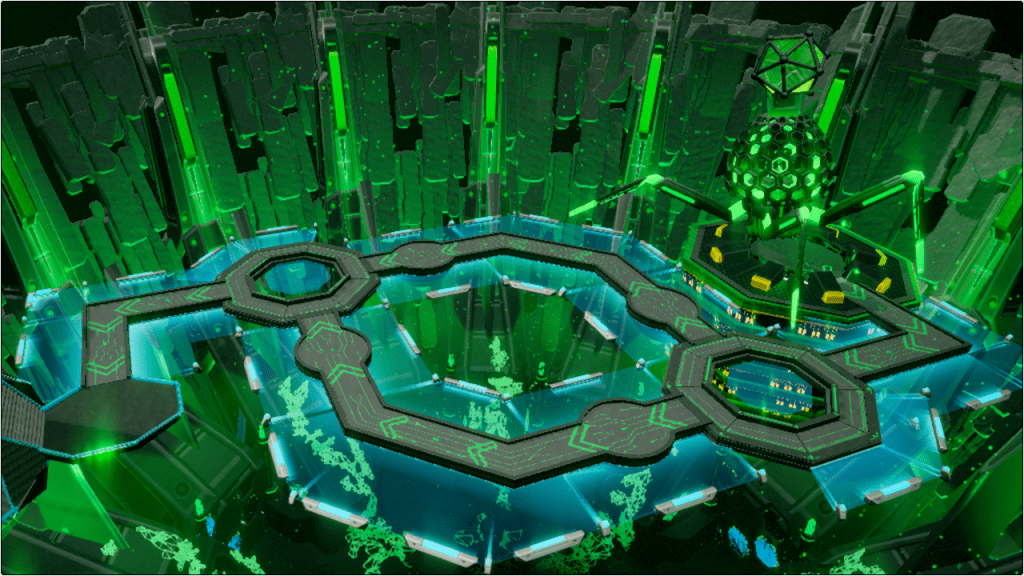
Mal-Wars features a menu level acting as a hub for two actual levels with 20 waves each. Together, they add up to about an hour of gameplay.
Mal-Wars was originally developed as a complex clicker game with some tower defense elements. As development went on, however, we gradually switched over to tower defense because it proved to be more fun, and because it was easier to develop given the CORE platform’s architecture and our own limits. Most of the group was unfamiliar with CORE, so keeping the scope simple to make room for learning was important.
Our first build was a prototype that featured two mechanics: tower placement, and a player avatar. Tower placement was enabled with an experimental tower defense template given to us by a Manticore representative, significantly reducing the engineering overhead. We then scrapped the avatar, allowing development to shoot forward rapidly. By the middle of the term, we added most of the towers, art, and animations, and spent the rest of the project on improving what we had.
My Role
For this project, I worked as the leader of the design team. As the design lead, I spent the first three weeks of development meeting with the other teams to plan the game’s mechanics. Once everything was agreed upon, I compiled it into a game design document and dove into development.
From there, I converted the contents of the design document into weighted task lists. I worked with the other leads to get an idea of what their teams could do, and used that information to give each task a priority. Once a task was complete, the lead in charge of it would return it to the design team for testing and integration.
To the their credit, each team made an effort to proactively integrate and test their output before submitting it. As such, the design team had much more time to focus on playtesting and tweaking balance. Good cross-lead communication also allowed me to easily control the project scope and account for the group’s capabilities. Thanks this flexibility, we finished the project two weeks ahead of schedule.
Beyond my duties as a lead, I also provided engineering help on some of the more math-heavy tasks, like the mortar tower’s projectile curve. Near the end of the project, I also assumed the task of making the menu level’s user interface, as the art team was busy building out the menu level itself.
 Sydney Fonderie